

 Walking Tours
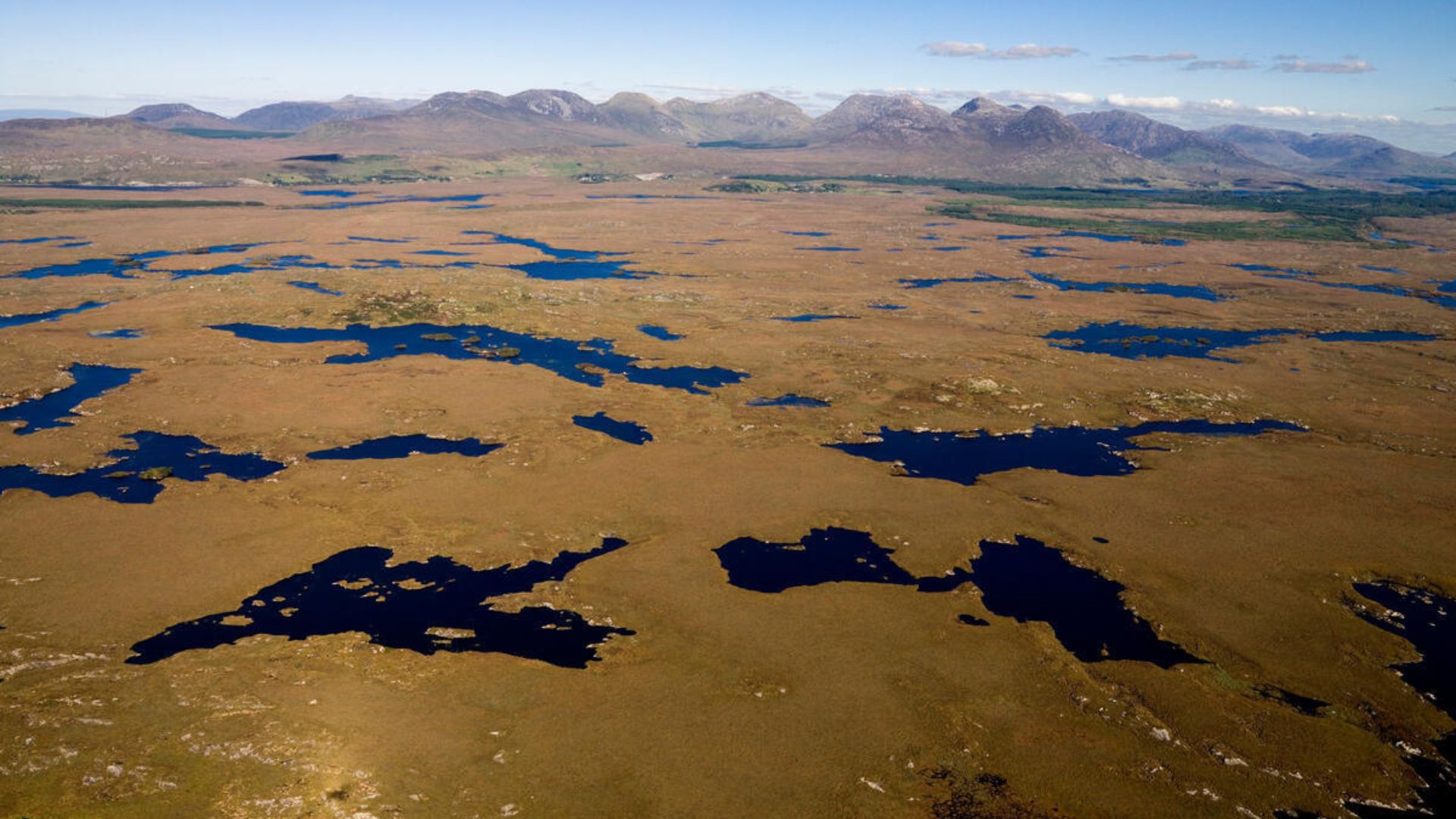
 Ireland’s bogs are a defining feature of the Irish landscape and a major part of its natural and cultural heritage. In Connemara in particular, they shape much of the scenery, with vast stretches of blanket bog, heath and low mountains forming the backdrop to the region.
What bogs are
Bogs are wetland ecosystems made up largely of waterlogged peat, formed over thousands of years through the slow accumulation and decomposition of plant material. They are one of Ireland’s most important natural carbon stores, holding carbon that would otherwise be released into the atmosphere.
Ireland contains a significant proportion of the world’s blanket bog habitat (often cited at up to around 8%), making it internationally important for biodiversity and climate regulation. In Connemara, this landscape is especially visible, with large continuous areas of intact and cut-over bog stretching across the hills and valleys.
Human use and heritage
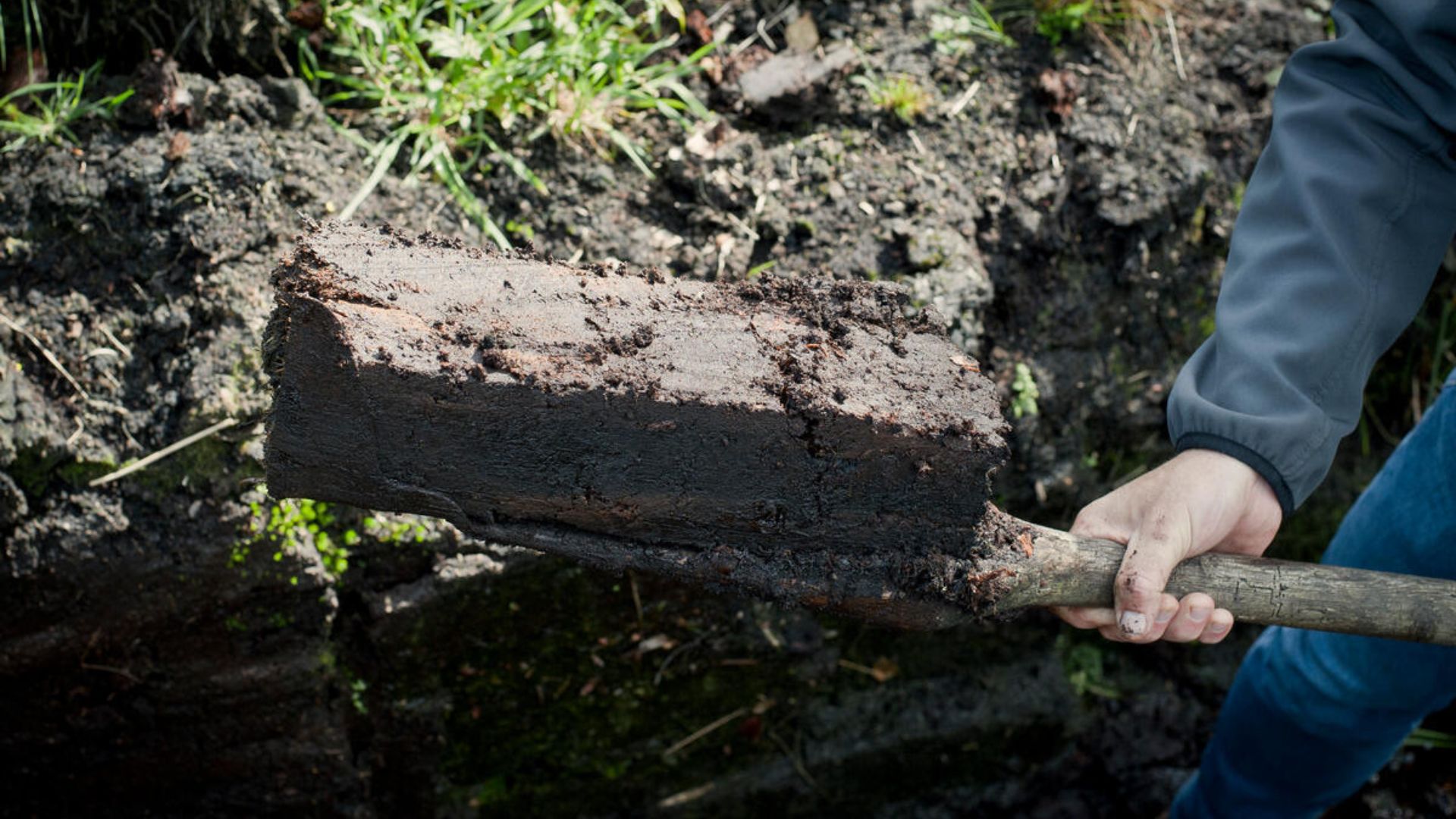
For centuries, bogs were also an important source of fuel in Ireland. Turf cutting was widely practised, and in many rural areas it remained an important part of seasonal life and heritage for generations, although it has been significantly reduced in recent years in order to conserve and protect the bog.
Experiencing the landscape
From a visitor perspective, bog landscapes are a key part of what you experience when travelling through Connemara. The terrain often opens out into wide, exposed peatlands with bog pools, sphagnum moss and hardy vegetation adapted to acidic, waterlogged conditions. These areas also support a range of wildlife.
Folklore and legend
Bogs are also deeply rooted in Irish folklore. The will-o’-the-wisp (tine ghealáin) refers to faint, flickering lights sometimes seen over bogs, traditionally thought to be spirits leading travellers astray. These are now understood as a natural phenomenon associated with gases released during the decomposition of organic material in peatlands.
Wildlife
Wildlife in bogs is equally distinctive. The Irish hare (Lepus timidus hibernicus) is one of the most iconic species found in these landscapes. It is a subspecies of the mountain hare and has been present in Ireland since the end of the last Ice Age, around 12,000 years ago. Unlike its colder-climate relatives, it does not turn white in winter, reflecting Ireland’s milder conditions.
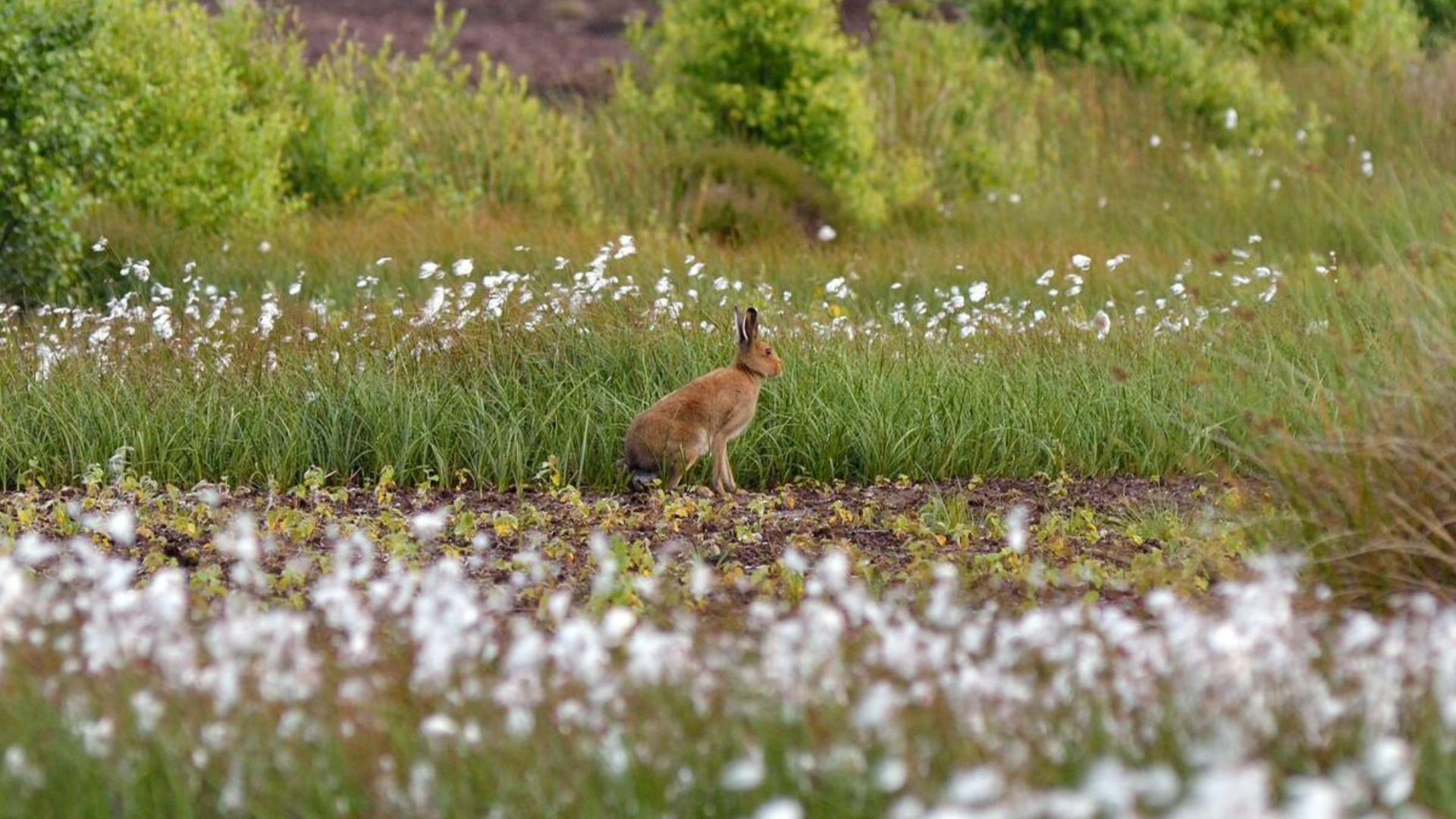
In Irish mythology, hares are often seen as liminal animals linked to the Otherworld. It was thought that hares guarded the entrance to it. It was also believed that the women of the Sidhe transformed into hares, and it was therefore considered taboo to eat them in ancient Ireland.
Today
Today, many of Connemara’s bogs are recognised as protected habitats and are part of wider conservation and restoration efforts, including rewetting damaged peatlands to help restore their ecological function and carbon storage capacity.